George Adamopoulos
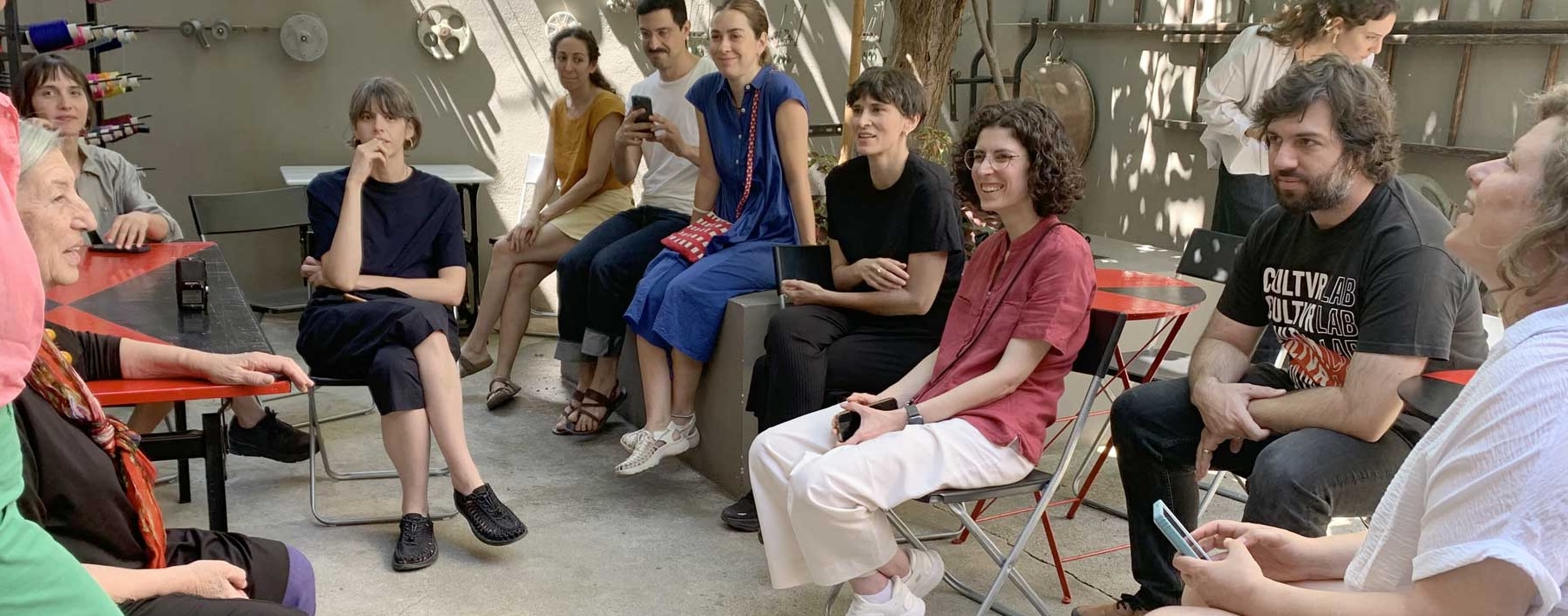
It’s rare for me these days to find myself in places where I feel safe to let my guard down, and connect with other artists about the messy, troubled, imperfect realities of our practices.
When we are asked to speak publicly, as artists or technologists, what is expected from us is usually some form of success story, a coherent narrative, a profound truth, a witty statement that feels meaningful and important.
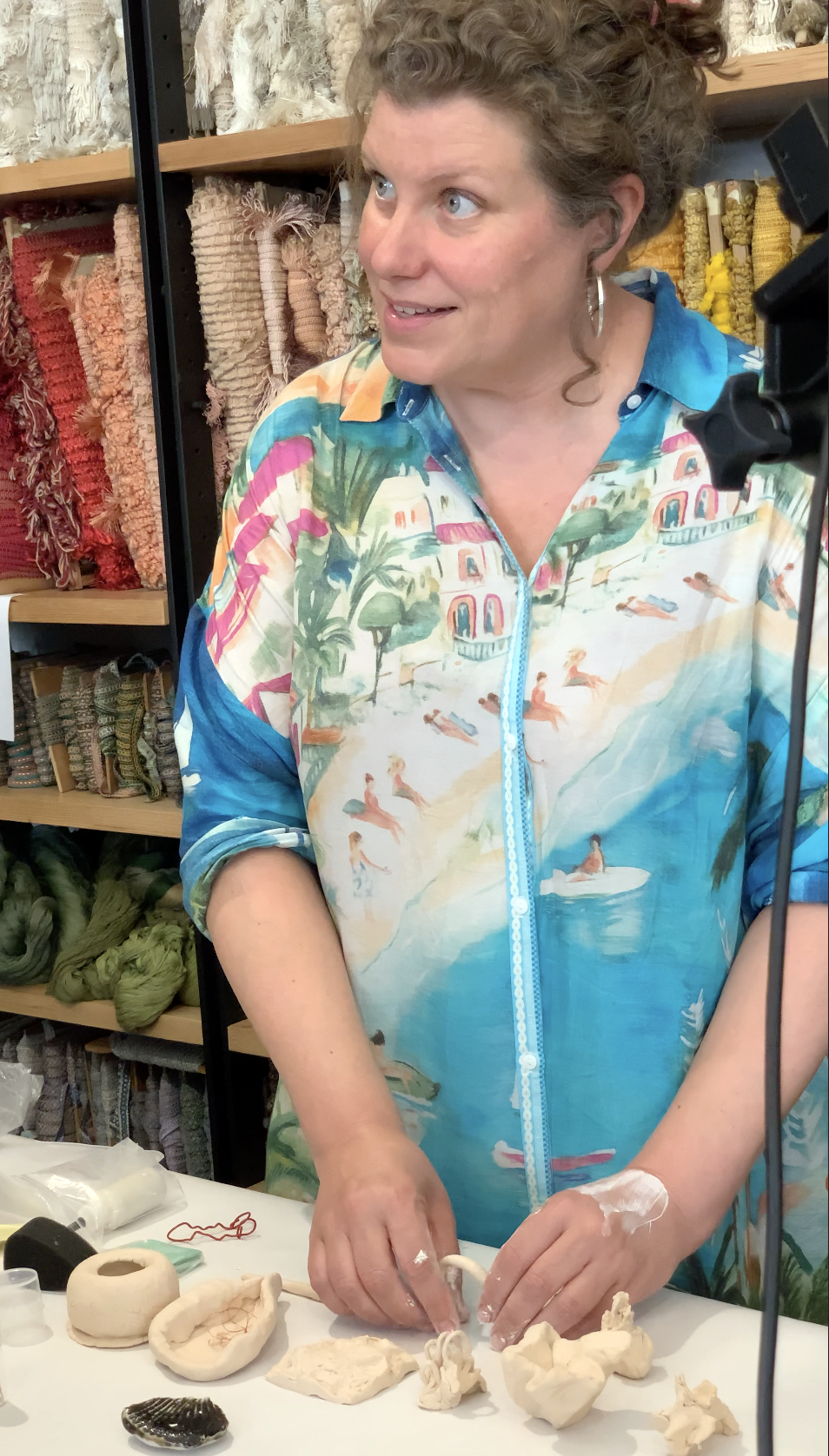
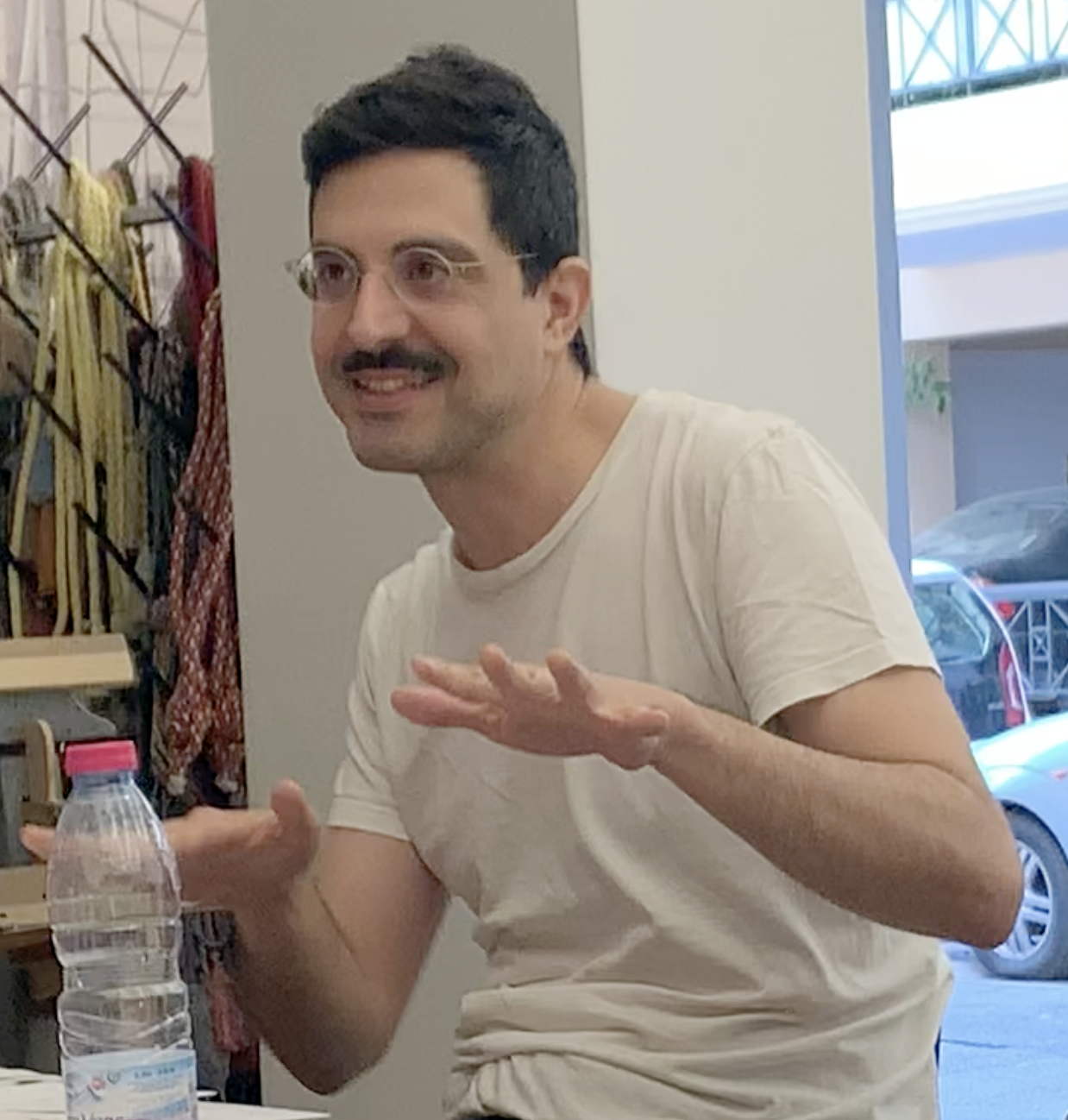
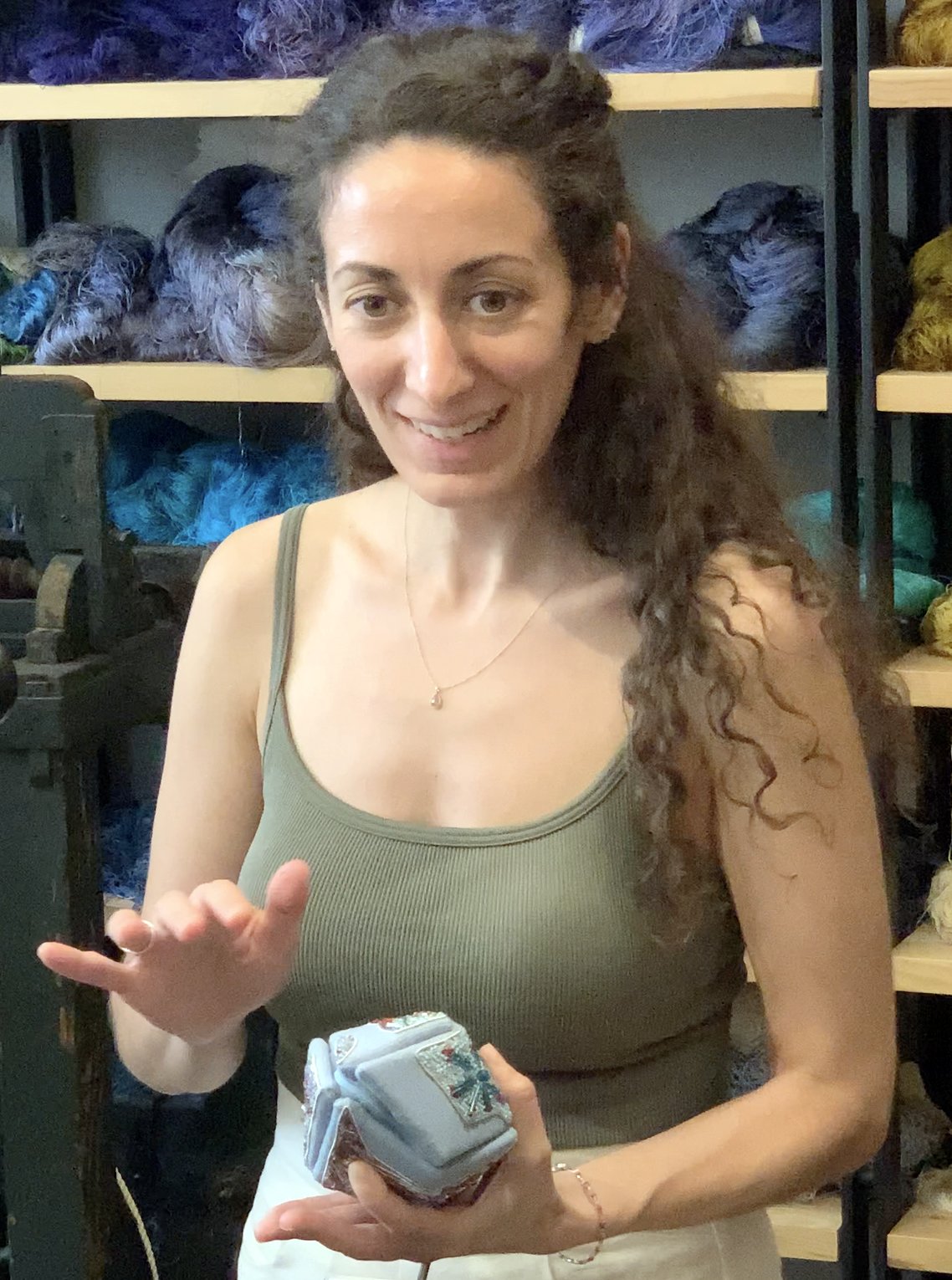
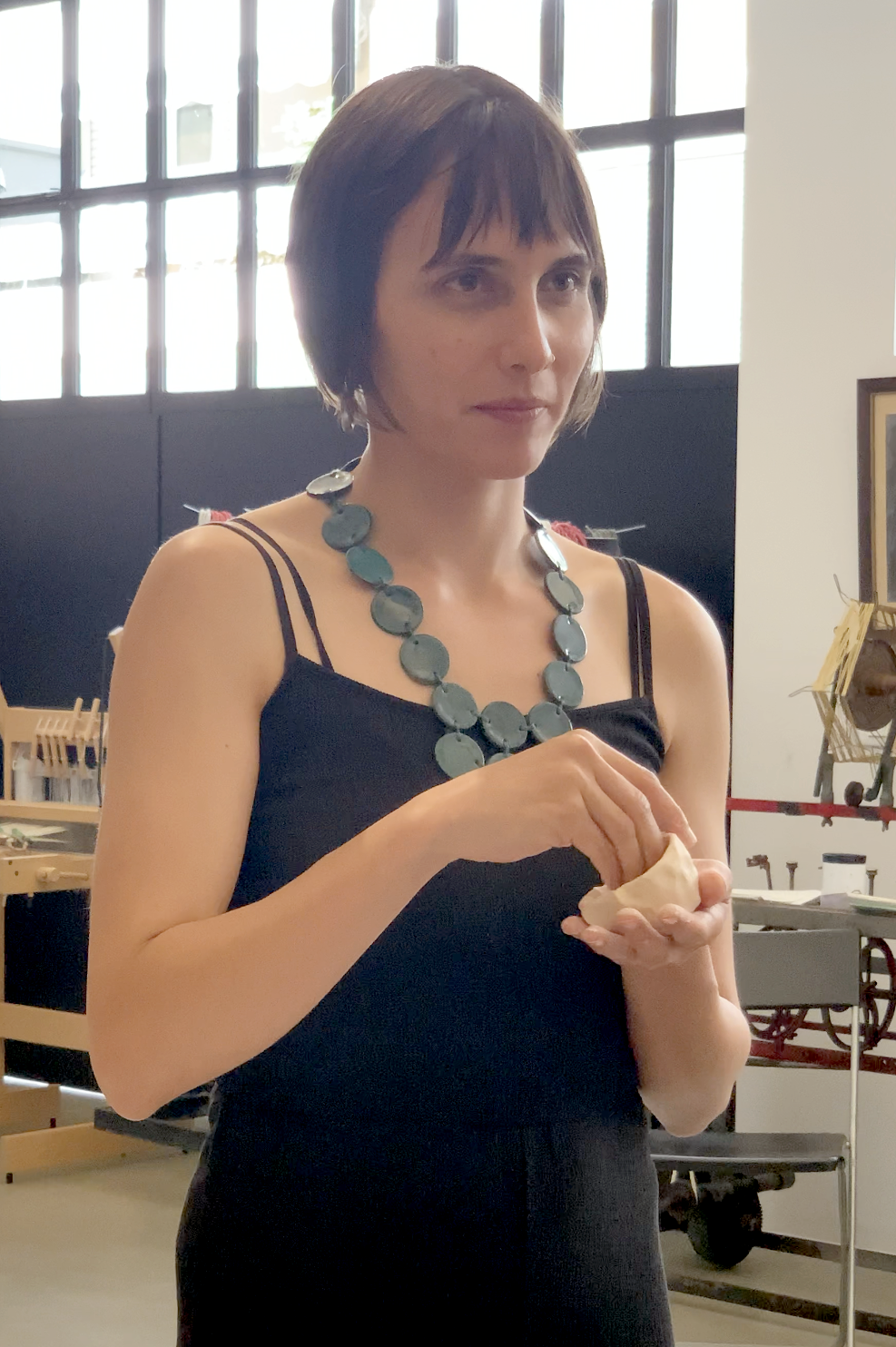
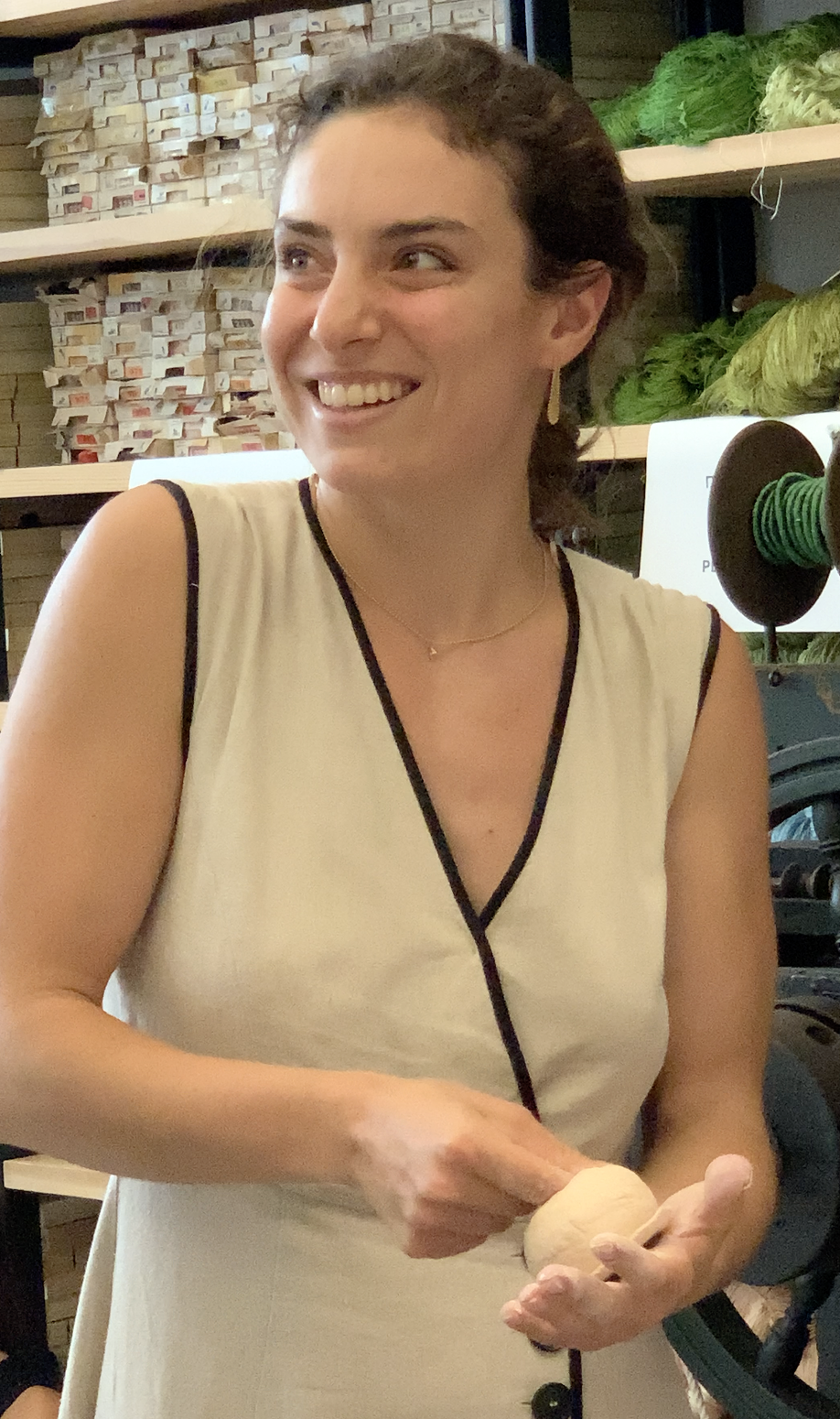
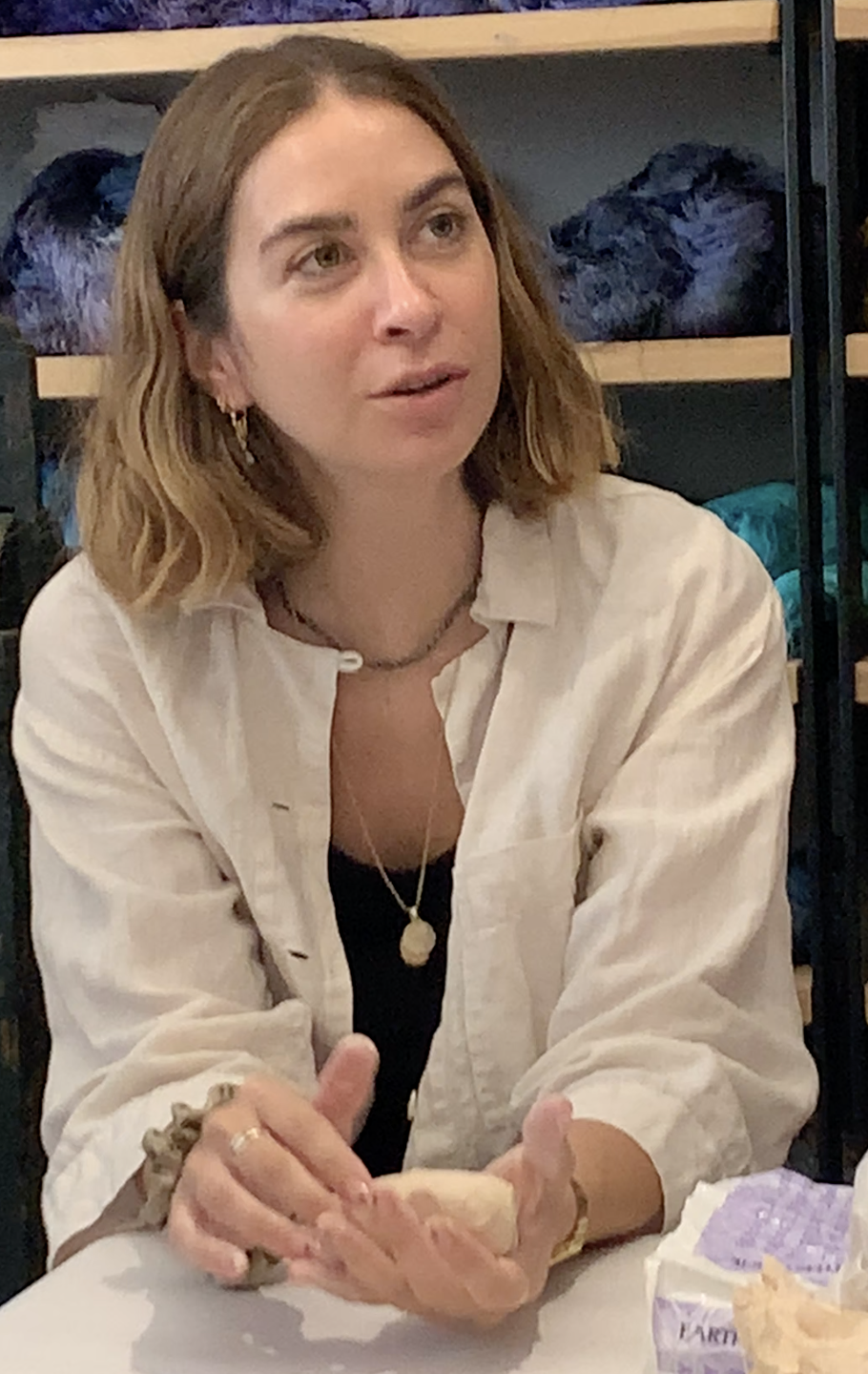
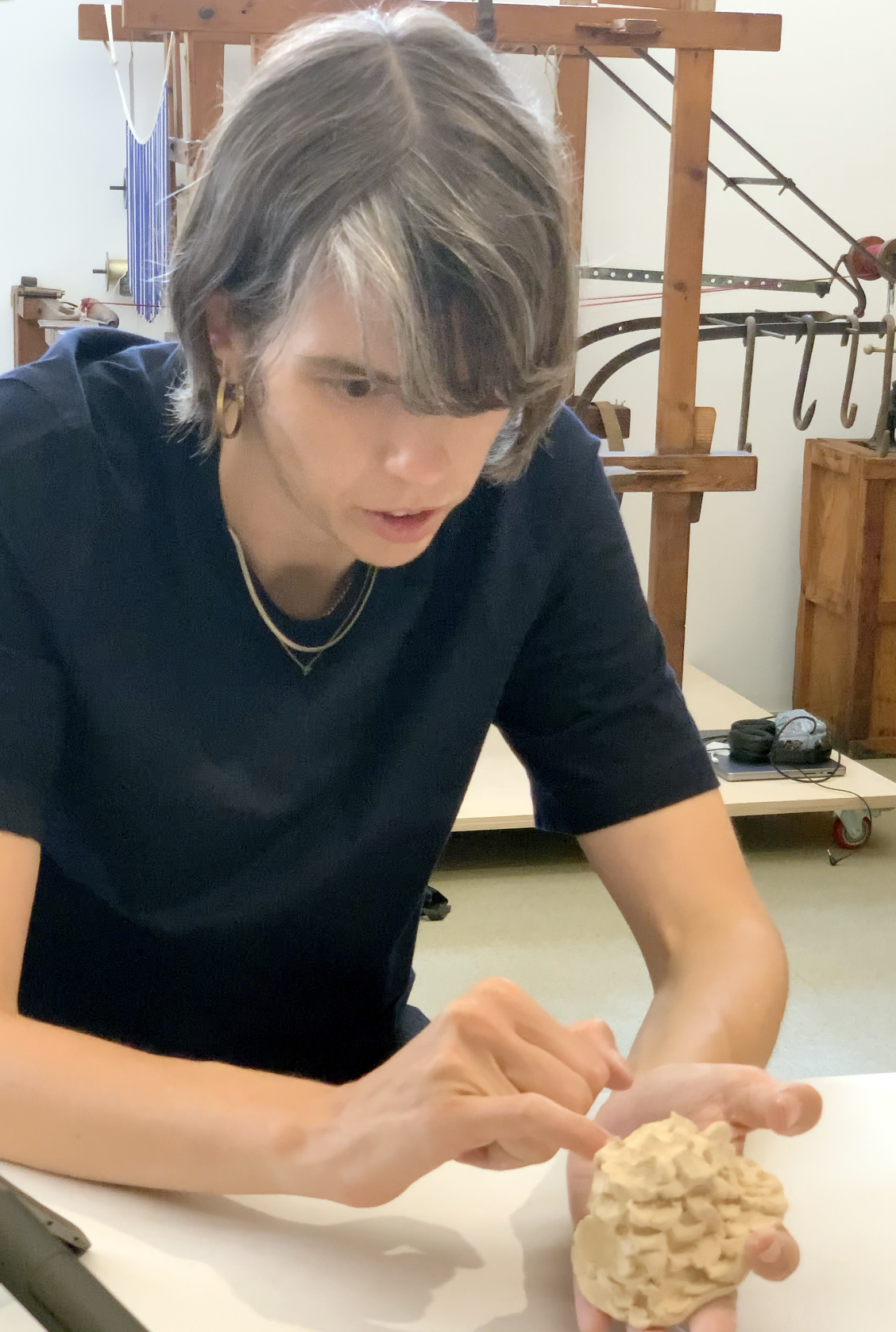
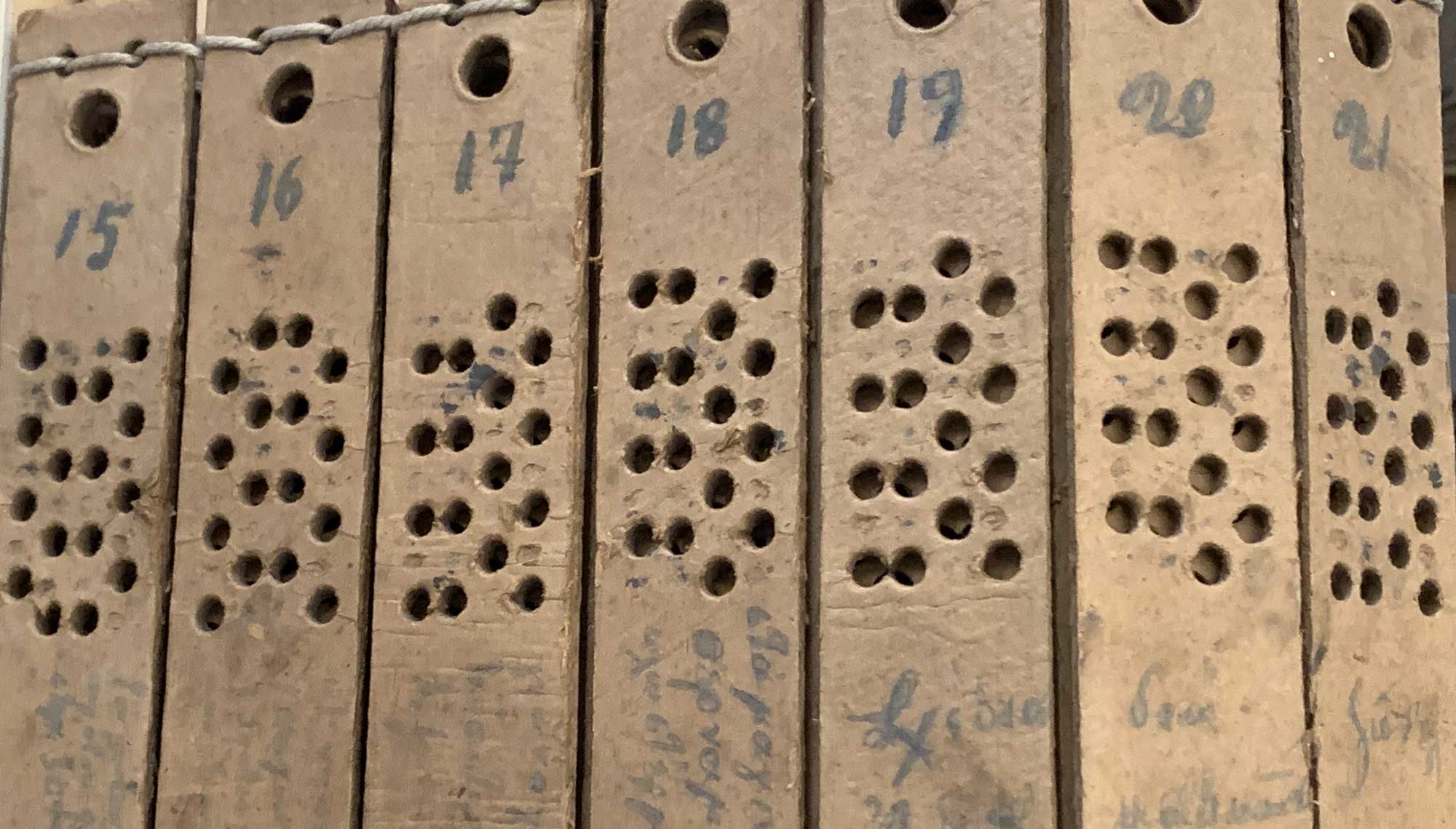
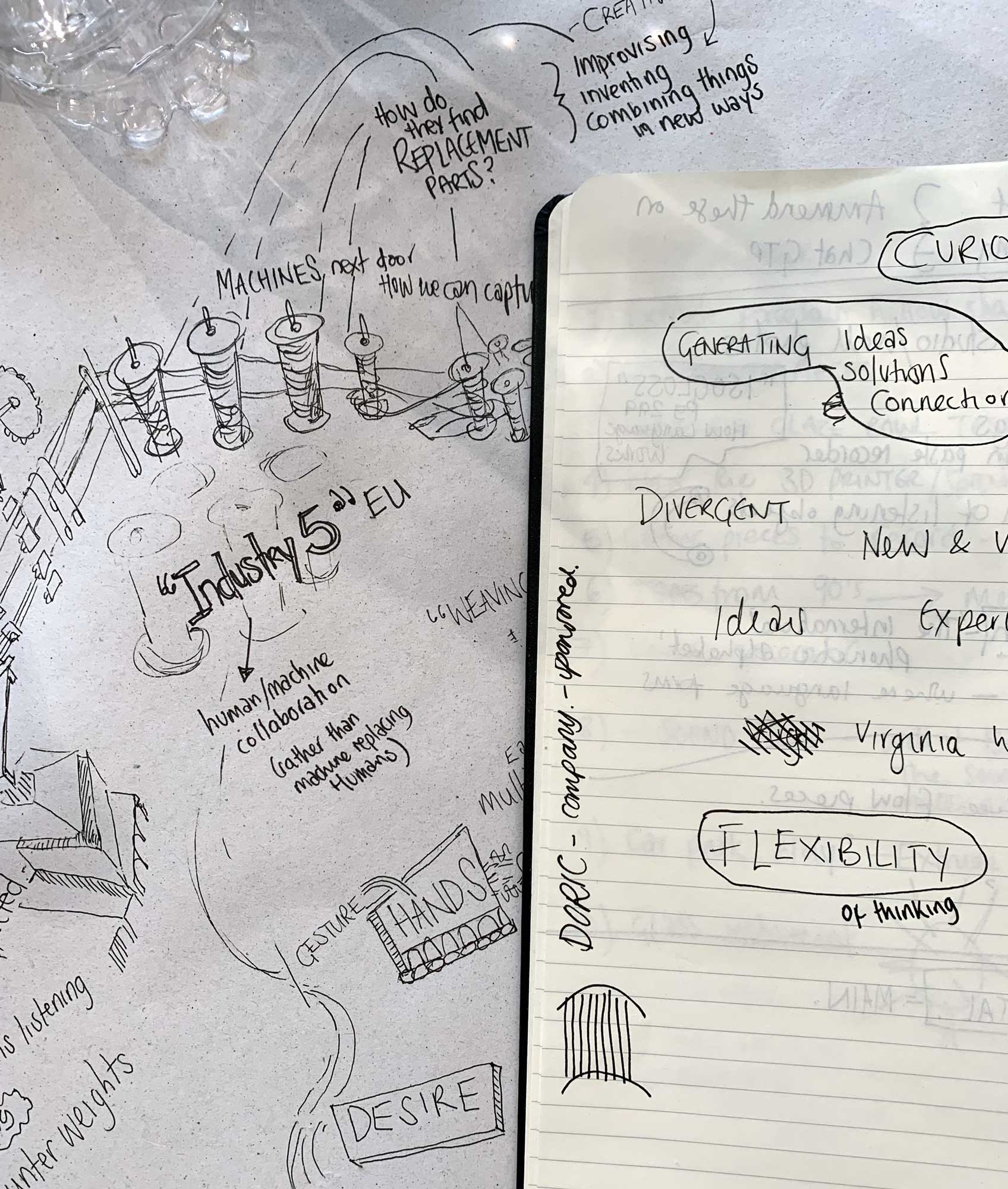
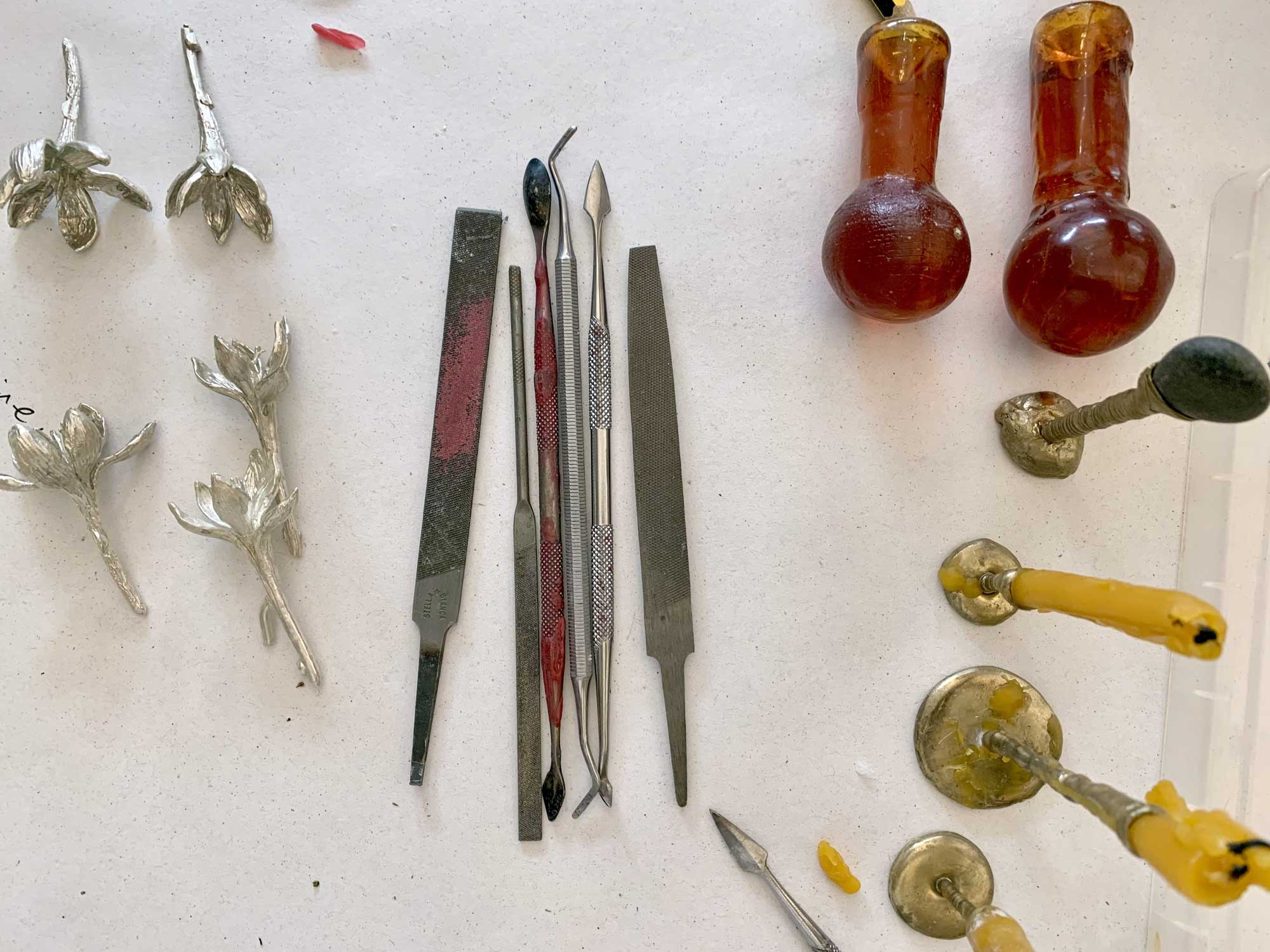
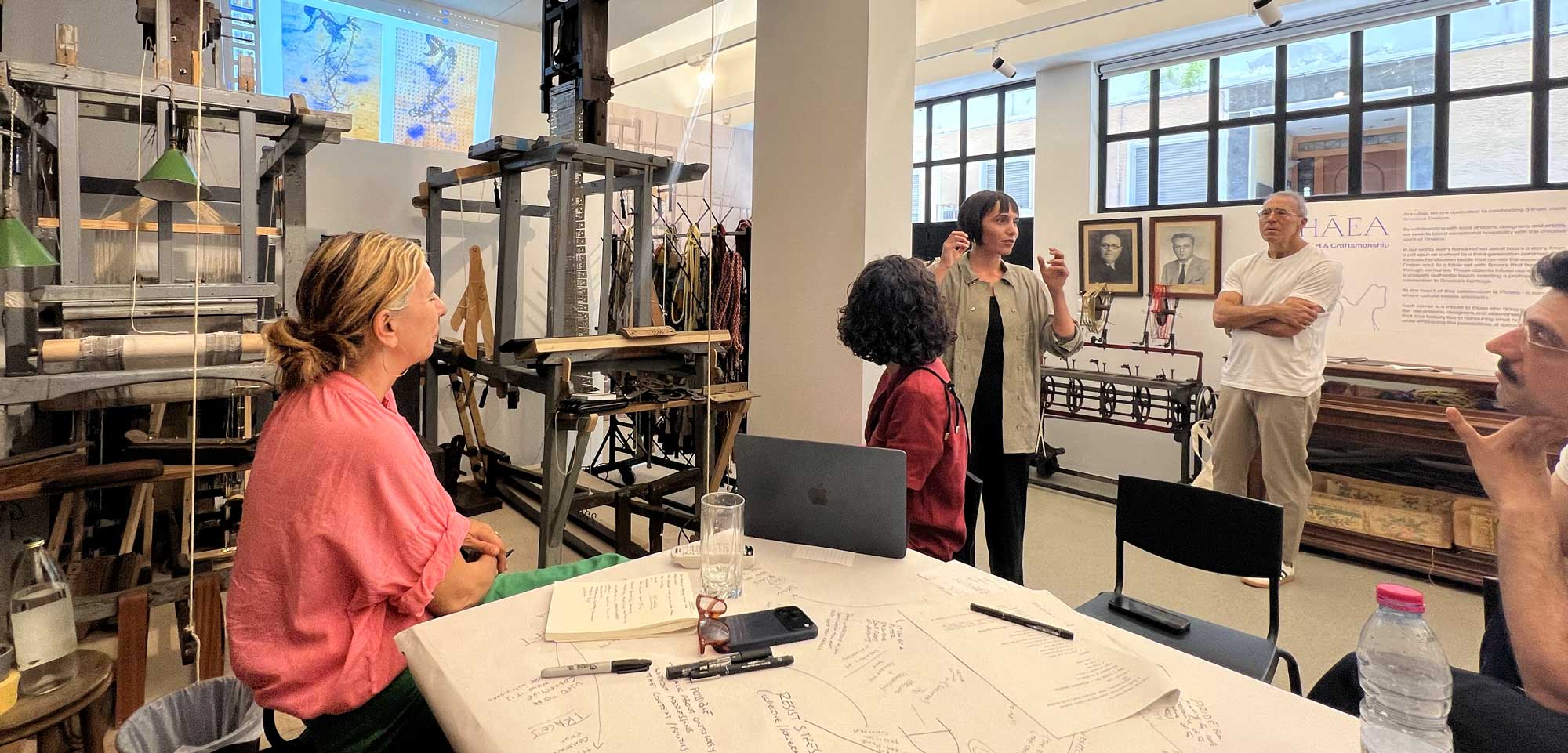
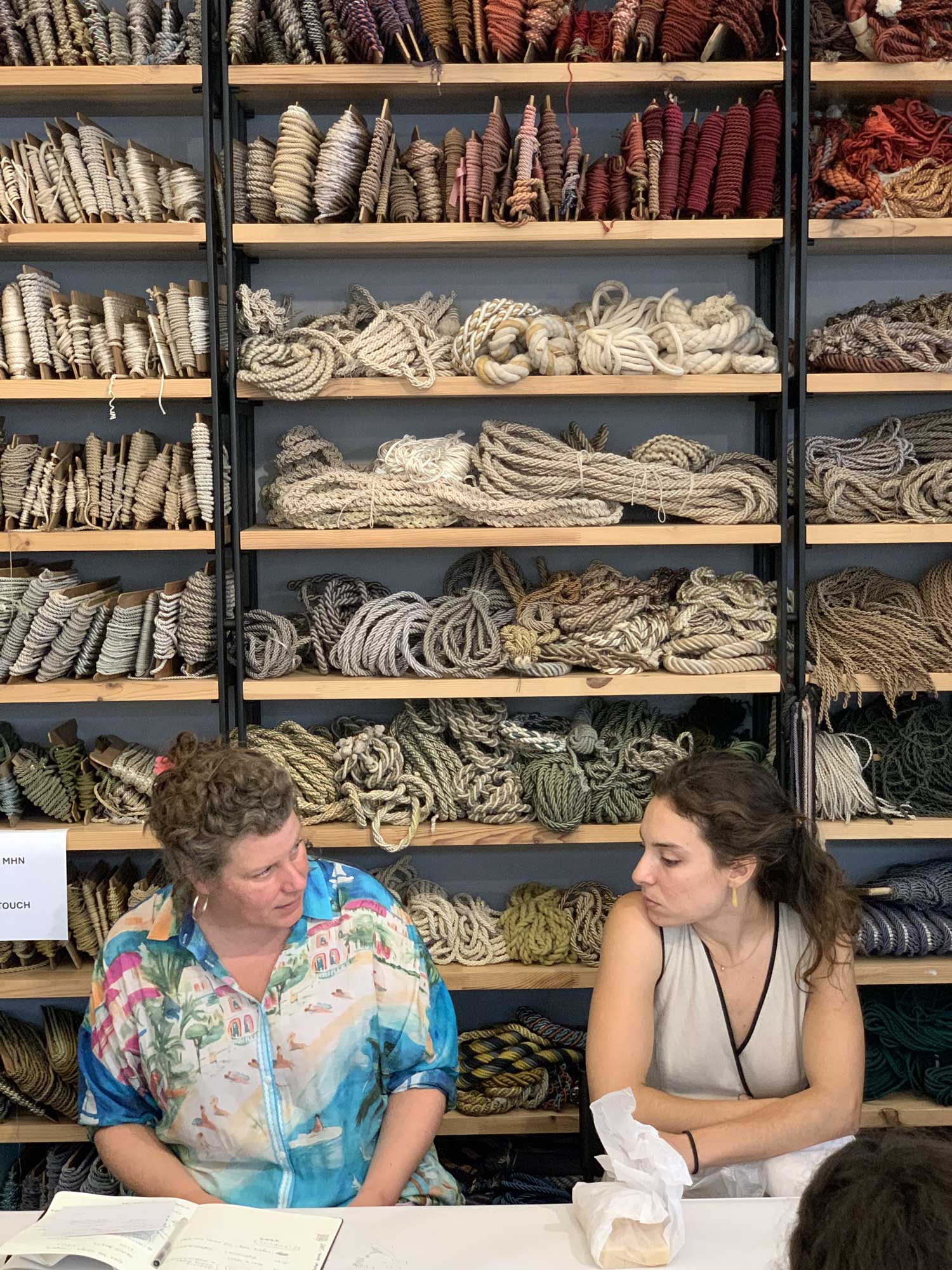
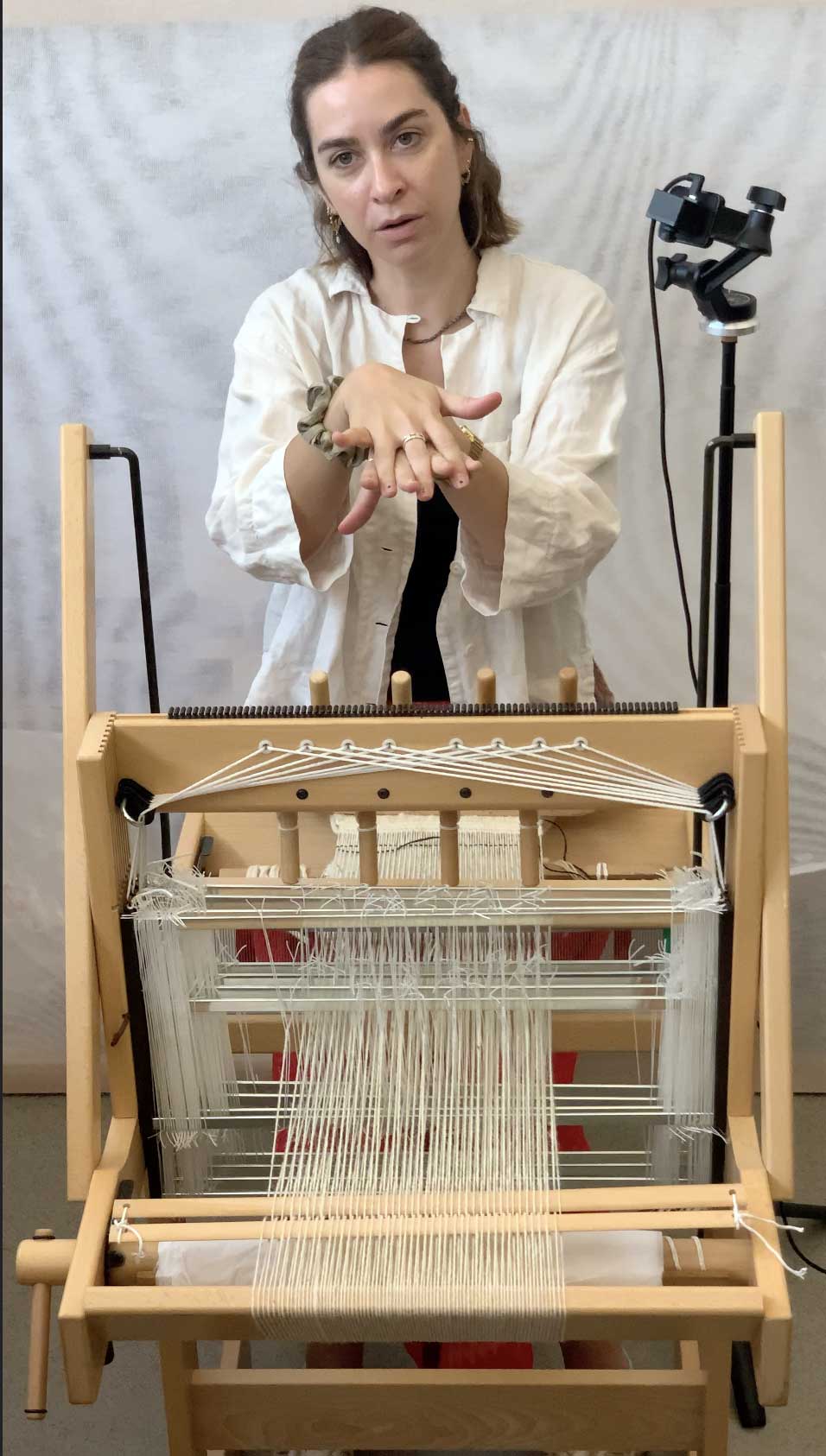
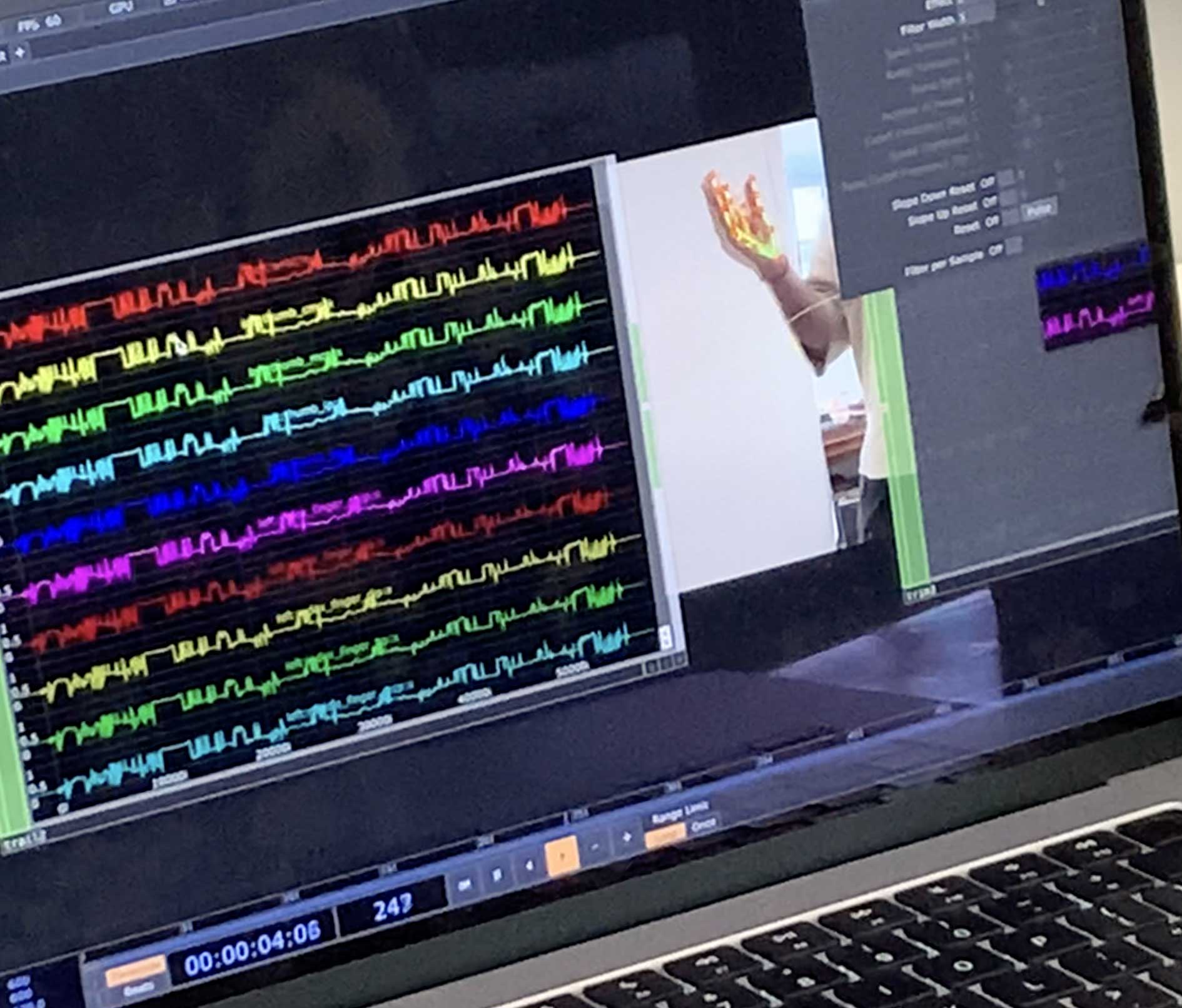
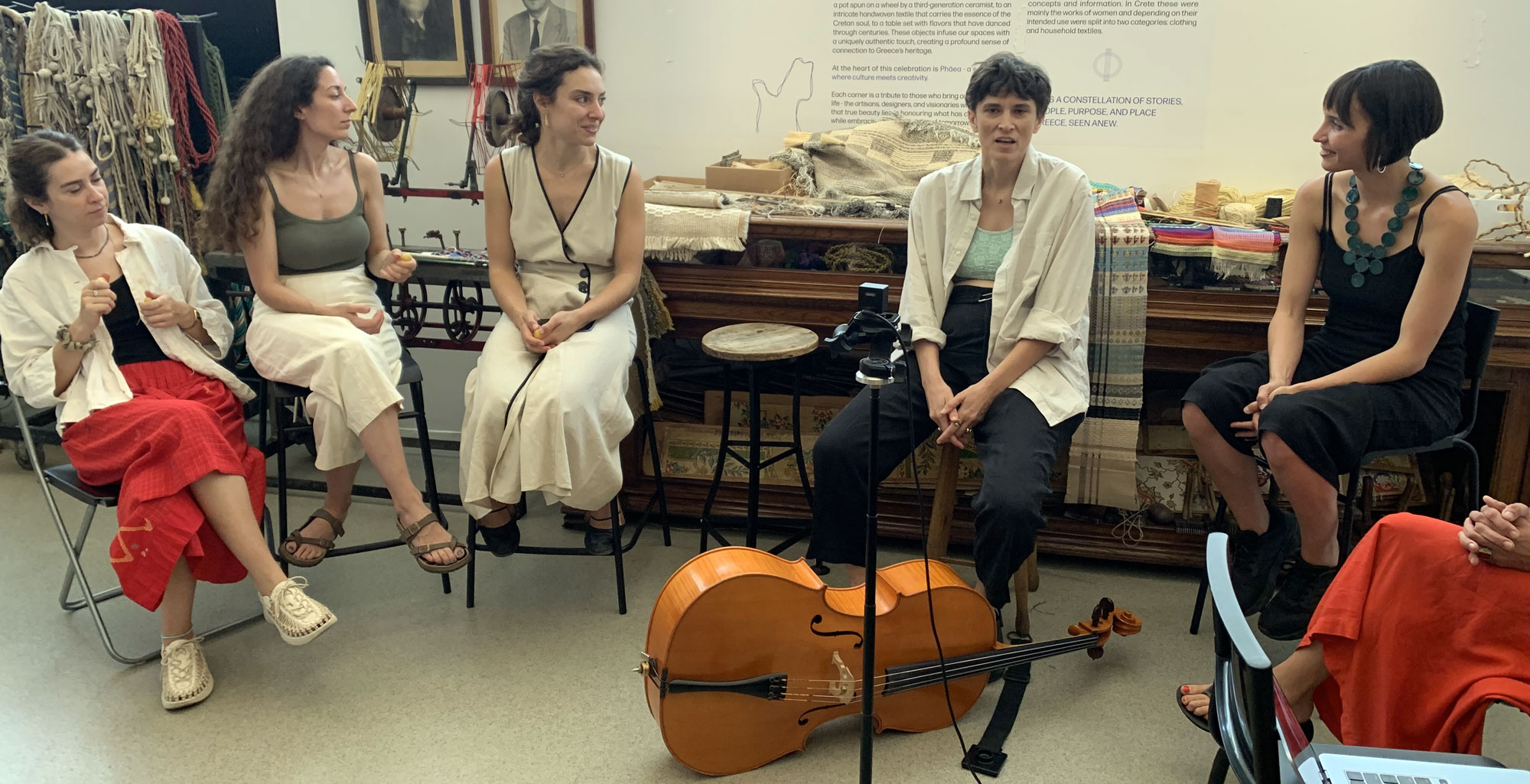
What you created was first and foremost a forum that allowed us to lower our personas, and expose our artistic selves for what they are: vulnerable, uncertain, indeterminate. I am not sure how this happened. It could be the beautiful space, a few sq. m. frozen in time, between two Jacquard looms looming over us in an indeterminate state between defunct and operational, spools of colourful threads in every corner, cables, markers, clay blocks and wax pellets, a projection on the ceiling(!) of a neural network reconfiguring its fuzzy knowledge base in real time. Or it could be the people you chose to fill this room, perhaps sharing a common predisposition to leave our egos outside the door. It’s quite possible that the format itself — equal parts structured, with well-thought-out questions, and open-ended, with live demonstrations — was the key to unlocking this precious way of collaboration.
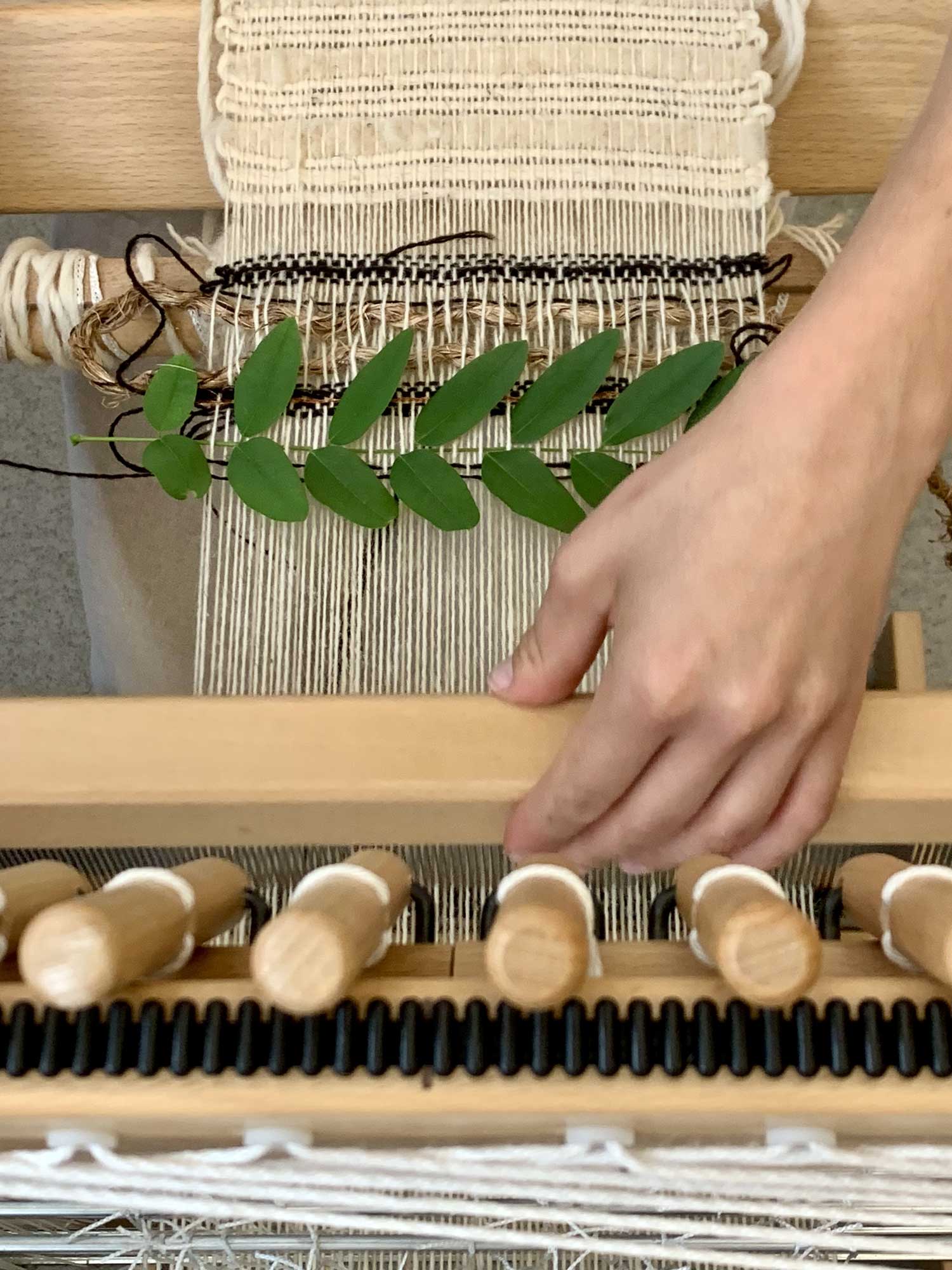
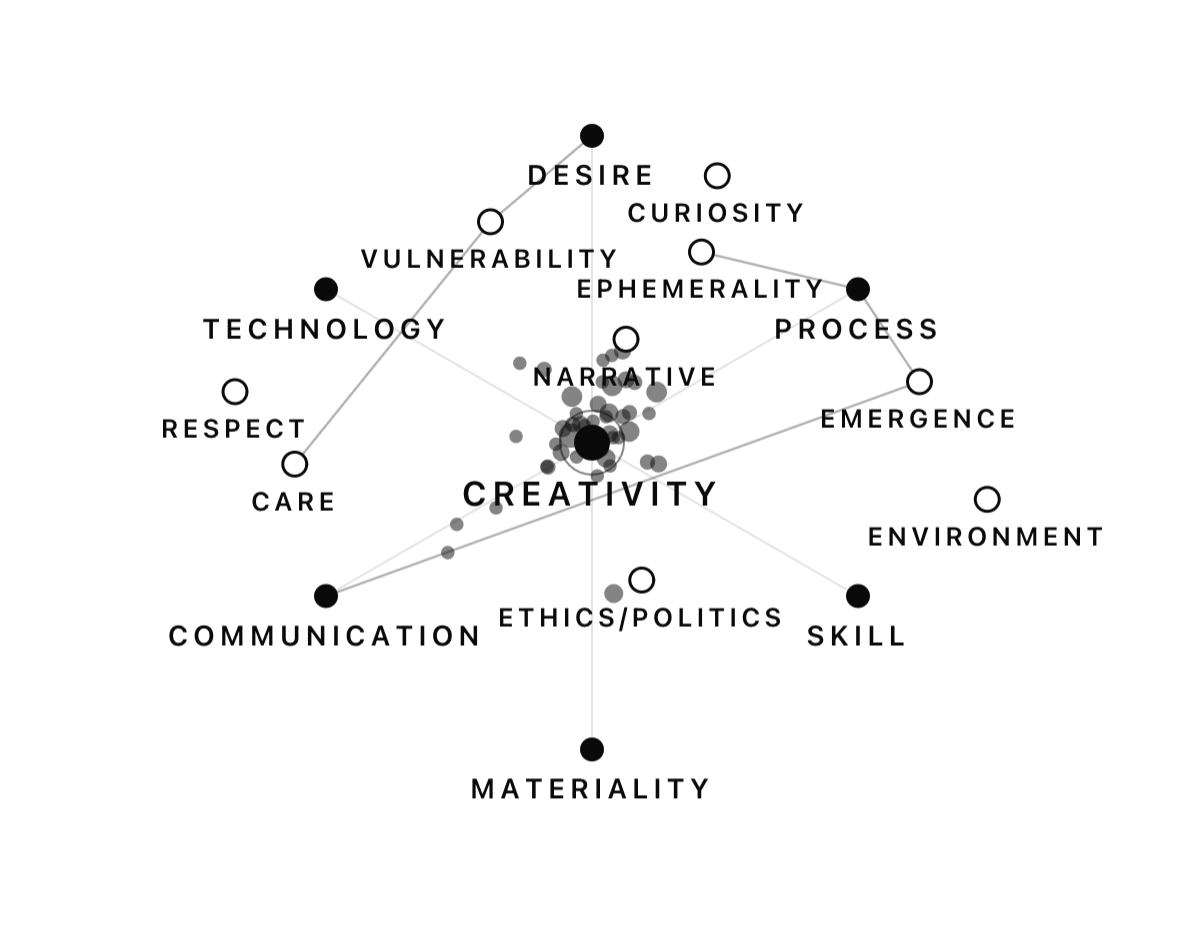
I was quite unsure about the results of this workshop, due to how diverse our practices are, at a surface level. How could I, a creative coder, meaningfully interact with traditional textile designers, sculptors, and an experimental cello player? It was an immense surprise, during the first two hours of the workshop, to see how resonant — not necessarily similar — our approaches, anxieties, and references were in response to the mother question “What is the definition of Creativity?” and the offspring questions that spawned from it. It seems that our languages might be different, but the words, sentences, and essays we craft talk about complementary worlds. Worlds that can fit together like puzzle pieces. What feels particularly important is that we approached our crafts through critical Play: oscillations between making and thinking, touching matter and exchanging literary references, speaking from a position of knowledge and then being humbled as we clumsily tried instruments for the first time. It was fun and liberating.
I left the workshop with an intense desire to contaminate my art form, to let the processes of others teach me, to pay close attention to and understand tools and instruments that have remained exotic to me until now. Surprisingly, at the end I found something like optimism in spite of current AI developments. AI is a technology that compresses by design: time, data, processes. But nothing in that room could have been compressed. Maybe this is the way forward, if we fear losing ourselves to AI: invest in our relationships with other artists, form coalitions, meet and co-create in real life.
Seek out the things that refuse to be sped up.
Do we need to define Creativity? I can’t say for sure. I am looking forward to your book for that.
What I can say confidently, after this workshop, is that it’s vital to talk about Creativity, try to (re)define it, question our assumptions about it, find ways to protect and nurture it, and exchange our deeply personal stories about it. I truly hope for this to be the start of a long collaborative process. Working title: Hands.
 Maria Sigma, Alexandra Bissa, Grace Iro Pappas, Viki Steiri, Natalia Manta